Incense and burners: metals, types and how to choose
A guide for esoteric shops, incense stores and distributors: which metal suits each burner, how incense sticks, dhoop and cones differ, and what to check when importing ritual products from India.

By Vijay ChoudharyCo-founder & Partner, Customer relations · 5 min read
In short
For a burner, bronze is the finest and heaviest choice, aluminium the lightest and cheapest, and iron the toughest, with a finish that keeps rust off. In incense, sticks have a bamboo core, dhoop is paste without bamboo and a stronger scent, and cones are the same paste shaped into a cone. When importing, watch the packing of metal pieces, moisture in incense, and the shipping of camphor, which travels as dangerous goods.
The four kinds of burner
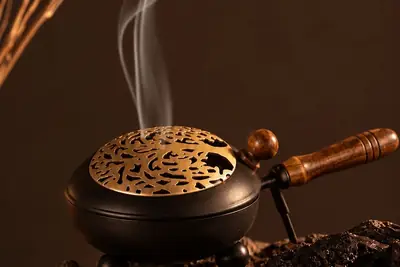
- Charcoal burner: holds a lit charcoal disc on which resins such as copal, benzoin (loban) or frankincense are placed. It is the most used in Mexico, where it is called a sahumador.
- Camphor burner: a small dish or lamp for camphor tablets, as in the Indian aarti.
- Benzoin and resin burner: for resins burned directly or on charcoal.
- Incense burner: for sticks and cones; it catches the ash.
Names vary by market: in Mexico a burner is a sahumador or incensario, while in Argentina sahumerio usually means the incense stick itself. If you sell in several countries, use the name your customers know on the label.
Bronze, aluminium or iron
| Metal | What it is like | Best for |
|---|---|---|
| Bronze | Heavy and solid, golden in colour. Develops a patina with use; can be polished. | Shops selling gift or collector pieces at a higher price. |
| Aluminium | Light and rust-free. Allows detailed cast designs. | Volume and entry prices; freight per piece is lower. |
| Iron | Very tough and heavy, rustic-looking. Needs paint or a finish against rust. | Heavy use, such as temples, spiritual centres or markets. |
Every metal heats up with charcoal or camphor. Look at the handle, feet and lid: they are what make a burner safe to use. In India, cities such as Moradabad in Uttar Pradesh are known for their brass and bronze work.
Sticks, dhoop and cones
| Form | What it is | How it is used |
|---|---|---|
| Sticks | A bamboo core coated in fragrant paste | In an incense holder; the ash falls on the tray |
| Dhoop | A denser paste with no bamboo; stronger scent | The tip is lit and it rests on a dhoop holder |
| Cones | The same paste, moulded into a cone | The tip is lit and it sits on a heat-proof dish |
Sticks are made in two ways: hand-rolled with a paste that already carries the fragrance, or dipped in fragrance oil after drying. How long a stick burns depends on its length and thickness. The quotation states the method, the fragrance, the length and the number of sticks per pack.
Our line includes lemongrass, lavender, jasmine, tea tree, rose, patchouli, citronella, loban (benzoin), lily and sandalwood sticks, plus dhoop and cones in the same fragrances. See it all in Ritual & Incense.
Camphor
Camphor is sold as tablets and is used in India in the aarti, the offering of light. It slowly evaporates at room temperature, so it must be packed airtight.
For transport it is classed as a flammable solid (UN 2717). It needs dangerous-goods paperwork and not every courier accepts it, so camphor samples can't always travel by express courier.
What to watch when importing
- Packing metal: each piece is wrapped and boxed so the finish doesn't scratch; iron is also protected from moisture.
- Moisture in incense: damp softens sticks and can bring mould. Incense ships in cartons with liners, and in the monsoon months we add desiccants to the container.
- Scent: if herbs or spices travel in the same container, we pack incense separately and stow it away from them.
- Tariff code: incense falls under 3307.41 and camphor under 2914.29; burners are classified by their metal. More in HS codes for herbs, spices and oils from India.
- Labelling: if you sell to consumers, your label must meet your market's rules; in Mexico the general commercial labelling standard is NOM-050-SCFI. Mosquito coils can have their own registration rules, so confirm them with your broker.
If this is your first import into Mexico, read how to import herbs from India into Mexico too: the steps for registration, broker and documents are the same.
Frequently asked questions
Which metal is best for a burner?
It depends on your customer and your price point. Bronze is heavy, looks the finest and ages well; aluminium is light, doesn't rust and is the cheapest to ship; iron is very tough and rustic-looking but needs a finish that protects it from rust.
Do burners get hot?
Yes, every metal heats up with lit charcoal or camphor. That is why burners have handles or feet, and they should always be used on a heat-proof surface in a ventilated room.
What is the difference between incense sticks, dhoop and cones?
Sticks have a bamboo core coated in fragrant paste. Dhoop is a denser paste of the same kind with no bamboo, and gives a stronger scent. Cones are the paste moulded into a cone, which burns from the tip.
Can you make incense under my brand?
Yes. We agree the fragrance, the number of sticks per pack, the packaging and your artwork, and state them in the specification. You can approve a sample before production.
Can camphor be shipped by courier?
Not always. For transport, camphor is classed as a flammable solid (UN 2717), so it needs dangerous-goods paperwork and many couriers won't accept it. We confirm the shipping method in the quotation.
Can incense and herbs travel in the same container?
Yes, but incense scent can transfer to herbs and spices. We pack incense separately, in sealed liners, and stow it away from food products in the container.
Importing from India?
Send us the product, quantity and destination port. We reply with a written specification and price.
 APEDARCMC/APEDA/27884/2025-2026
 FSSAI licence12226999000177
 Seed licenceSS/2025-26/41276
 FIEOMember