
HS codes for herbs, spices and oils from India
A reference table of Harmonized System codes for the products most often imported from India, and what you need to know so your customs broker can turn them into the right import code.

By Deependra SinghCo-founder & Partner, Operations · 5 min read
In short
Indian spices are almost all in chapter 9 of the Harmonized System (for example turmeric under 0910.30 and cumin under 0909.31); dried medicinal and aromatic herbs such as ashwagandha or moringa usually fall under 1211; oilseeds are in chapter 12; oils in chapter 15; dried fruit in chapter 8; and incense sticks under 3307.41. The first six digits are international; your customs broker turns them into your country's full import code.
How the codes work
- Six international digits. The World Customs Organization's Harmonized System is the same almost everywhere up to the sixth digit.
- India: eight digits (ITC-HS). This is the code we put on the invoice and the export declaration.
- USA: ten digits (HTSUS).
- Mexico: an eight-digit fracción plus a NICO. The TIGIE adds a two-digit commercial identification number. The fracción sets the duty and the rules that apply, such as SENASICA or COFEPRIS.
Because each country adds its own digits, and some products can be classified in more than one way depending on how they are presented or used, the final import classification is always made by your customs broker.
Spices
| Product | HS code | Note |
|---|---|---|
| Black pepper | 0904.11 · 0904.12 | whole · crushed or ground |
| Dried chilli | 0904.21 · 0904.22 | whole · crushed or ground |
| Cinnamon | 0906.11 · 0906.19 · 0906.20 | by species · crushed or ground |
| Clove | 0907.10 · 0907.20 | whole · crushed or ground |
| Nutmeg · mace | 0908.11/12 · 0908.21/22 | whole · ground |
| Cardamom | 0908.31 · 0908.32 | whole · ground |
| Coriander seed | 0909.21 · 0909.22 | whole · ground |
| Cumin | 0909.31 · 0909.32 | whole · ground |
| Fennel · star anise | 0909.61 · 0909.62 | whole · ground |
| Dry ginger | 0910.11 · 0910.12 | whole · ground |
| Turmeric | 0910.30 | whole or ground |
| Spice mixtures (curry, garam masala) | 0910.91 | |
| Fenugreek · bay leaf | 0910.99 | other spices |
Herbs and botanicals
| Product | HS code | Note |
|---|---|---|
| Ashwagandha, shatavari, brahmi, tulsi, neem, gymnema | 1211.90 | plants and parts of plants used in pharmacy or perfumery |
| Moringa leaf | 1211.90 | some tariffs place it under another heading |
| Psyllium husk | 1211.90 | |
| Herbal teas and premixes | 1211, 0902 or 2106 | by recipe: single herb, with black tea, or prepared |
Seeds, grains and seeds for sowing
| Product | HS code | Note |
|---|---|---|
| Sesame | 1207.40 | |
| Mustard seed | 1207.50 | |
| Flaxseed | 1204 | |
| Sunflower seed | 1206 | |
| Groundnuts | 1202 | |
| Chia and other oilseeds | 1207.99 | |
| Sorghum (jowar) | 1007 | |
| Millets (bajra, ragi and others) | 1008.21 · 1008.29 | for sowing · other |
| Buckwheat · amaranth | 1008.10 · 1008.90 | |
| Moringa and papaya seeds for sowing | 1209 | seeds for sowing |
Oils
| Product | HS code | Note |
|---|---|---|
| Groundnut oil | 1508 | |
| Sunflower and safflower oil | 1512 | |
| Coconut oil | 1513 | |
| Mustard oil | 1514 | |
| Linseed (flaxseed) oil | 1515.11 | crude |
| Sesame oil | 1515.50 | |
| Black seed, moringa and other oils | 1515.90 |
More on these oils in Cold-Pressed Oils.
Dried fruit
| Product | HS code | Note |
|---|---|---|
| Raisins | 0806.20 | |
| Dates | 0804.10 | |
| Figs | 0804.20 | |
| Pineapple | 0804.30 | |
| Mango | 0804.50 | |
| Banana | 0803 | |
| Apricots | 0813.10 | |
| Papaya, amla and other dried fruit | 0813.40 | |
| Fruit with added sugar (infused) | 2008 |
Ritual products
| Product | HS code | Note |
|---|---|---|
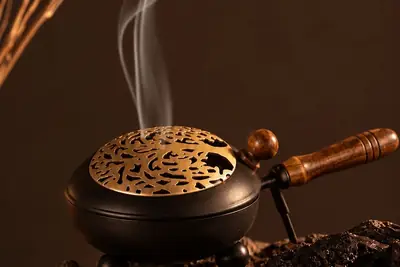
| Incense sticks, dhoop and cones | 3307.41 | agarbatti and preparations that operate by burning |
| Camphor | 2914.29 | |
| Herbal mosquito coils | 3808.91 | |
| Burners | by metal | iron and steel in chapter 73, bronze and brass in 74, aluminium in 76; decorative pieces may fall under 8306 |
See the whole line in Ritual & Incense.
Three tips to avoid problems
- Describe the product in full. Common name, botanical name, plant part and form (whole, cut or ground). For many spices the form changes the code.
- Confirm the code before you buy. It sets the duty and, in Mexico, whether SENASICA or COFEPRIS requirements apply. See also how to import herbs from India into Mexico.
- Use the same description on every document. The invoice, packing list and phytosanitary certificate should match.
This table is a general reference based on the 2022 edition of the Harmonized System, not a classification ruling. The classification of each product depends on its presentation and use: confirm it with your customs broker before you import.
Frequently asked questions
What is an HS code?
It is the international code used to classify goods in trade. The first six digits are the same in almost every country; each country adds more digits for its own tariff.
Is the HS code the same in India, the USA and Mexico?
The first six digits usually match. After that, India uses eight digits (ITC-HS), the USA ten (HTSUS), and Mexico an eight-digit fracción plus a two-digit NICO (TIGIE). That is why your customs broker confirms the import code even though we state the export code.
Who decides the tariff code for my import?
The importer, through their customs broker, who classifies the goods on the import entry. We state India's export code on the invoice and packing list and give you the full product description so the classification is right.
What is the HS code for turmeric?
Turmeric is classified under HS subheading 0910.30, whole or ground. Spice mixtures such as curry powder go under 0910.91.
What is the HS code for incense sticks?
Incense sticks (agarbatti) and other odoriferous preparations that operate by burning are classified under HS subheading 3307.41.
Importing from India?
Send us the product, quantity and destination port. We reply with a written specification and price.
 APEDARCMC/APEDA/27884/2025-2026
 FSSAI licence12226999000177
 Seed licenceSS/2025-26/41276
 FIEOMember